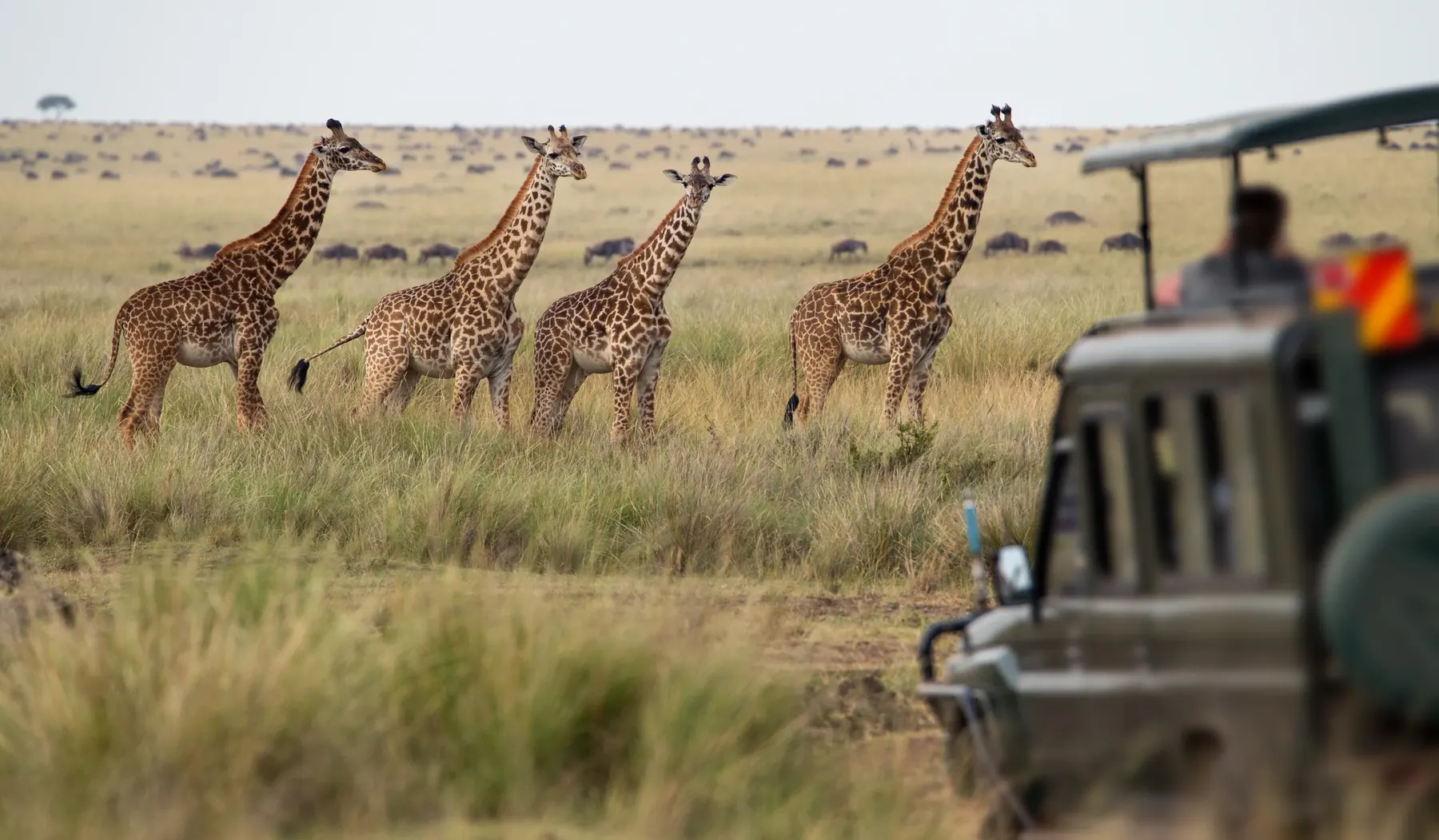
Endless plains and the greatest migration on the planet, seen from an open vehicle, unhurried.
June to July for the Grumeti river crossing, January to March for the southern calving season.
Dawn game drives, meals out in the savannah, and days without rigid schedules, guided by the real movements of wildlife.
Small boutique camps, in or by the park, chosen for their real proximity to the migration.
Enough time to follow the same herd for more than a day, instead of crossing paths with it just once.
Can be combined with Ngorongoro or Tarangire on the same trip.
Plan your tripThe Serengeti is Tanzania’s best-known national park: almost 15,000 km² of open plains in the north of the country, between Arusha and the Kenyan border. Its name comes from the Maasai word «siringet», meaning «endless plain» — which is exactly what you find on arrival: horizon-to-horizon savannah with almost nothing to interrupt the view.
The first five make up the so-called «Big Five», a term with roots in colonial-era hunting (the five animals considered hardest to hunt on foot) now used simply to describe the wildlife most sought after on a photographic safari. Seeing all five is never guaranteed on any safari — these are wild animals, not a zoo — but the Serengeti is one of the places in Tanzania where the odds are genuinely good.
More than two million wildebeest and zebra move in a continuous loop around the Serengeti-Mara ecosystem all year, following the rain and the grass. Where you’ll find them depends on the month (see our wider guide to the best time for a Tanzania safari if you’re also weighing up other parks):
December to March. Calving season: hundreds of thousands of calves are born within a few weeks on the plains around Ndutu.
Strong resident wildlife around Seronera all year round, regardless of where the migration happens to be.
June to September/October. This is where the Mara River crossings happen — the most iconic image of the migration.
The Serengeti features in three of our routes: the Classic Safari (4 days), the Golden Safari (5 days, our most-booked route) and the Grand Safari (6 days), always combined with Tarangire and Ngorongoro so none of the northern circuit’s big parks get left out. On all three you sleep inside or right on the edge of the park, in small boutique camps chosen for their real proximity to the wildlife, not just for the name.
Most itineraries spend 2 to 3 nights in the Serengeti — enough time to follow the same herd for more than a single game drive, rather than crossing paths with it once.
If you'd rather dedicate more time to wildlife and landscape photography, the Serengeti is also one of the regular destinations on our In Focus Safari.
See what our Serengeti routes cost →The classic pairing: open plains and Tanzania’s densest concentration of wildlife, just a few hours apart.
See Ngorongoro →Closing the safari with a few days on the beach is one of the most requested combinations, especially for honeymoons. See our guide to planning that itinerary.
See our Tanzania honeymoon route →