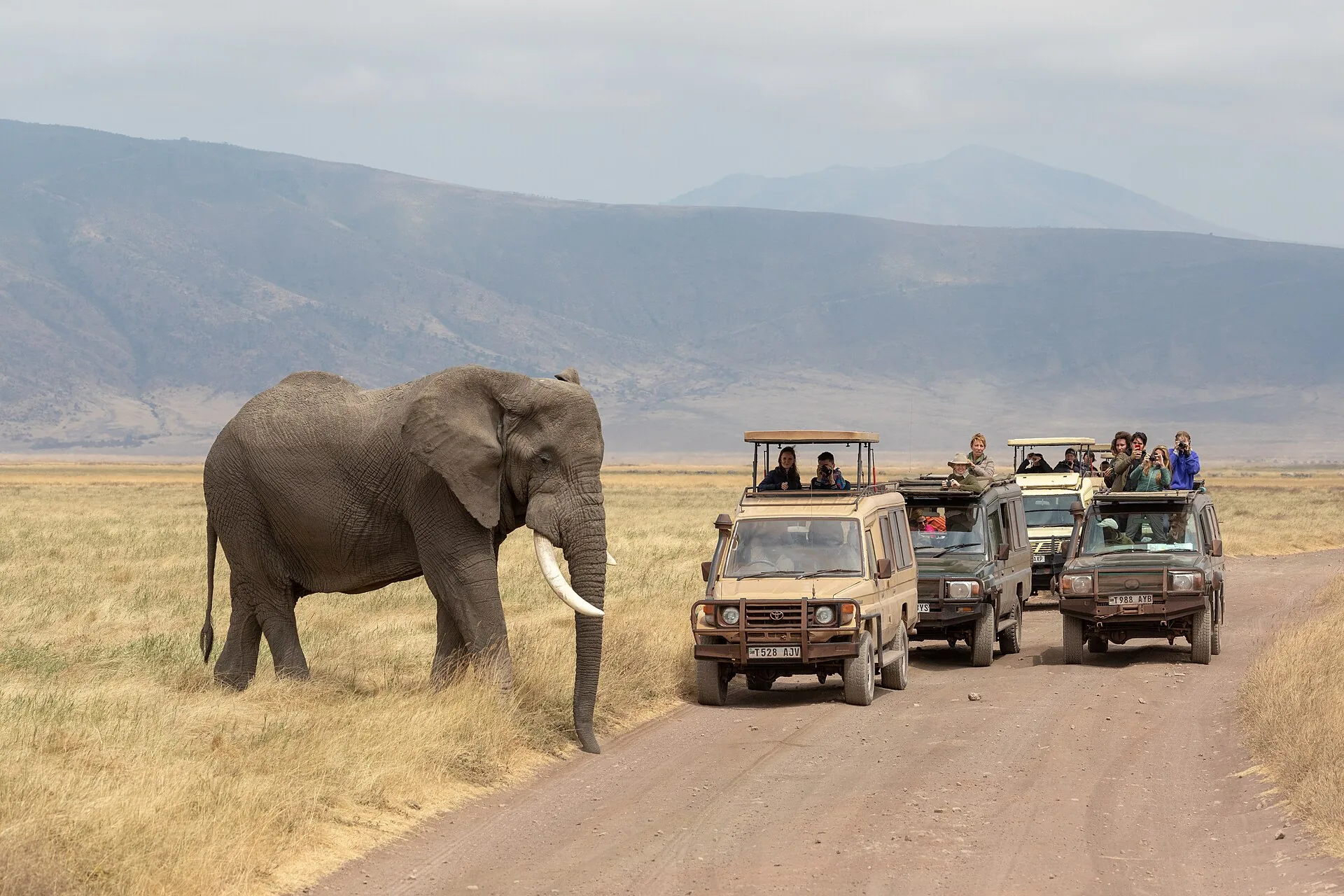
The world’s largest crater, a self-contained ecosystem with one of Africa’s greatest concentrations of wildlife.
Year-round, with clearer skies from June to October.
A descent into the crater in search of the Big Five, with lion and black rhino as the stars.
Lodges on the crater rim, with privileged views at sunrise.
The crater is explored in a single day, yet holds a diversity that would take a week to see in other parks.
Can be combined with Serengeti or Tarangire on the same trip.
Plan your tripNgorongoro is a volcanic caldera roughly 20 km across and nearly 600 metres deep, a UNESCO World Heritage Site. Because it’s an almost self-contained ecosystem, much of its wildlife lives inside the crater year-round without needing to migrate — which makes the density of animals per square kilometre one of the highest in Africa.
It’s one of the few places in Tanzania where seeing all of the Big Five in a single day is realistic, including the black rhino — endangered, and hard to see in most of the country’s other parks.
Ngorongoro is included in the First Safari (3 days), Classic Safari (4 days), Golden Safari (5 days) and Grand Safari (6 days) — along with Tarangire, it’s the park that features in the most of our itineraries. You sleep in lodges right on the crater rim, with privileged sunrise views before descending to explore.
A full day is usually enough to explore the crater floor at an easy pace, which is why it pairs so naturally with the Serengeti or Tarangire on the same route.
See what our Ngorongoro routes cost →Tanzania’s densest concentration of wildlife alongside the endless plains of the Serengeti, just a few hours apart.
See the Serengeti →Our 3-day First Safari combines both parks for travellers short on time who still don’t want to miss the essentials.
See Tarangire →