Can you do a self-drive safari in Tanzania? Yes, and some travelers do it every year: rent a 4x4, book your own lodging and drive the Serengeti without a guide. What almost nobody tells you is what it really involves: driving on the left, hundreds of kilometers of dirt track, no roadside assistance, a handful of fuel stations and different rules in each park.
In this guide we explain what “DIY” really means, what the rules say, how much you actually save and when a local guide is worth it. Without drama, and saying plainly what we cannot state with certainty.
What a “DIY Tanzania safari” really means: three ways to organize it
When someone searches for a DIY Tanzania safari, they may be picturing very different things:
- Fully self-drive: you rent a 4x4, you drive, you book lodging and you pay the park fees yourself.
- Rental car with a driver-guide: the vehicle is rented, but a local guide drives it. You book flights and lodging.
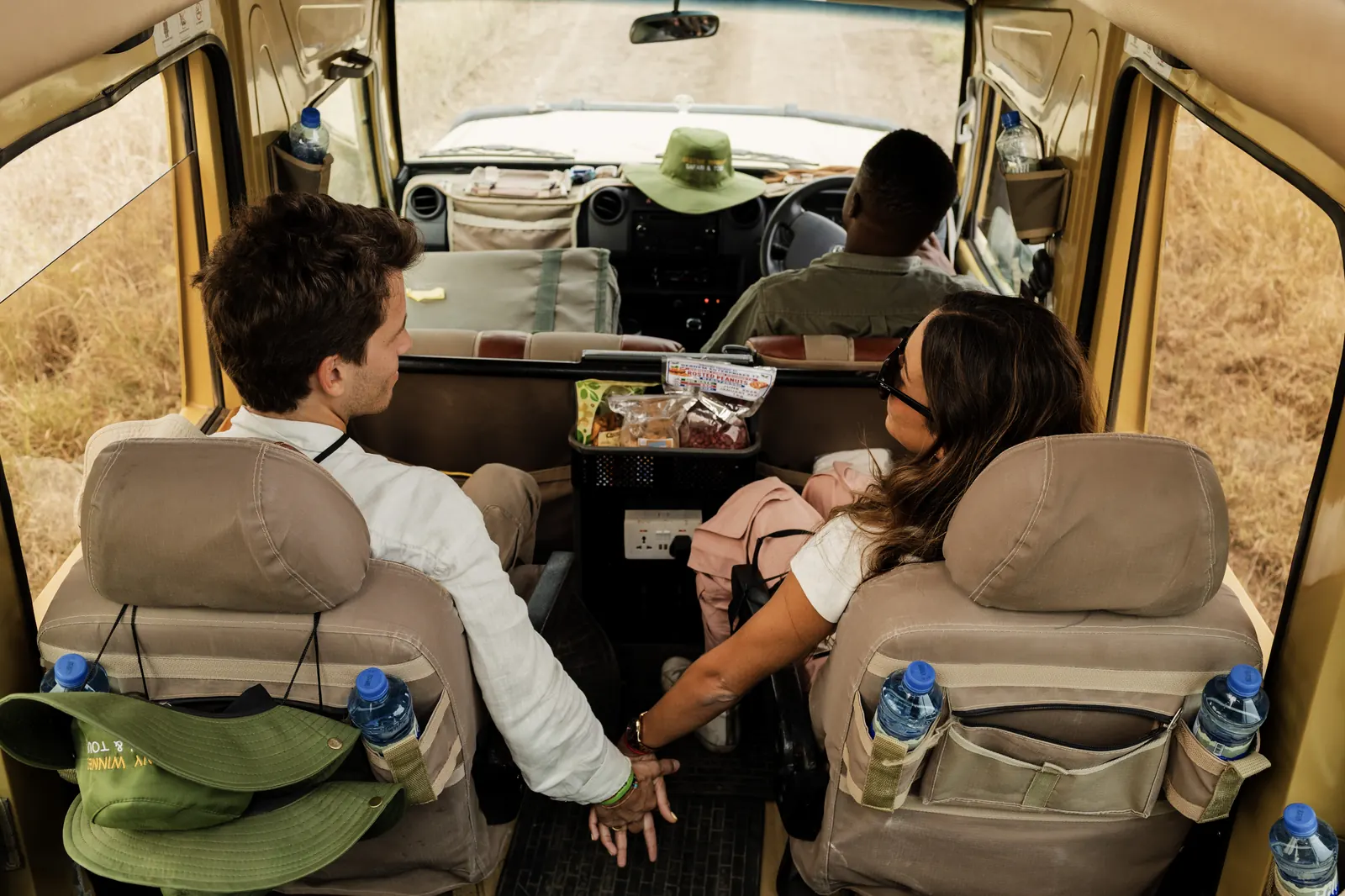
- Private safari with a local operator: a 4x4 and guide just for you, with lodging, park fees and logistics taken care of. This is the format we design at Destiny Winners (here is how it works).
Self-drive safari in Tanzania with a rental car: what to know first
Licence and driving
In Tanzania you drive on the left. With a foreign licence, travelers usually also carry an International Driving Permit, issued by your national motoring association. The guides we have consulted say a foreign licence or an IDP is valid for stays of under six months, but the exact requirements should be confirmed with the rental company and your consulate before you travel.
Insurance and assistance
All vehicles must carry third-party liability insurance. Your usual policy may not cover rentals in Tanzania, damage on unpaved tracks or an accident inside a park, so ask for the terms in writing. There is no roadside assistance network like the one at home: if you break down or get a flat tyre, you or the rental company have to solve it, sometimes hours away. Mobile coverage is patchy, so download offline maps.
Roads, distances and fuel
Distances are deceptive. As a reference, Arusha to Karatu is about 140 km (around 3.5 hours), and from Naabi Hill gate to Seronera in the Serengeti it is about 60 km (roughly an hour) with stretches of corrugated track. Driving Seronera to Arusha in a single day is not recommended: it takes 9 or 10 hours. The last fuel station before the Serengeti is in Karatu, and inside the park there is only an emergency one, at higher prices.
A 4x4 is recommended, especially in the rainy seasons (March to May and November and December), and you should avoid driving at night. To choose your month, see when to go to Tanzania.
Parks, fees and payments
According to the sources we have consulted, payments in TANAPA parks (such as the Serengeti, Tarangire or Manyara) are electronic: credit card or the authority’s own card, with no cash or debit cards. The Ngorongoro Crater depends on a different authority, the Ngorongoro Conservation Area, with its own fees and permits, which are usually arranged in advance through an operator. And in the crater, the sources say a ranger or registered guide has to ride in the vehicle.
Rules change and the sources do not agree on every detail. Before you book, confirm permits, fees and the crater rules directly with TANAPA and the Ngorongoro authority.
Is a self-drive safari in Tanzania cheaper?
Less than it looks. The biggest part of a safari’s cost is the park fees, and they are paid the same whether you go DIY or with an operator. What you save by driving yourself is the operator’s margin and the guide’s salary. What you pay extra: a well-equipped 4x4 rental, fuel for many hours of dirt track, camping gear or separately booked lodging, and the risk of losing days to a breakdown.
If you are after a cheap Tanzania safari, there are more reliable ways to lower the price without giving up the guide:
- Travel in the low season: April, May and November.
- Shorten the trip to 3 or 4 days and combine the parks with the most wildlife.
- Choose Standard-level lodging or well-located camps.
You can see how much each decision changes the price in our safari cost calculator, or check real prices per route in how much a Tanzania safari costs.
What a local guide adds to a Tanzania safari
The difference is not the car, but who is inside it:
- Finding animals: guides know the areas and usually talk to each other to find out where the wildlife is.
- Reading behavior: they know when to stop, wait or change track.
- Logistics: gates, timing, permits and lodging sorted out, without losing daylight hours.
- Safety and peace of mind: if something goes wrong, it is not your problem.
- Explanations: our guides speak English and Spanish and tell you what you are seeing.
When self-drive makes sense (and when it does not)
It can make sense if: you have experience driving a 4x4 on dirt tracks, you have time and flexible dates, you accept that things will go wrong and you have already self-driven in other African countries.
A guide is usually worth more if: it is your first safari, you have few days (between 3 and 7), you travel with children or older relatives, it is a honeymoon or a trip with fixed dates, or you want to make the most of a season such as the Great Migration.
The middle option: organize the trip yourself and outsource only the safari
“DIY” does not have to mean “blind”. Many travelers book their own flights and Zanzibar stay, and hire only the safari from a local operator. That is what we do for guests: a private 4x4 with a pop-up roof, an English- and Spanish-speaking guide and a clear price from the start. To see what your route would cost, calculate it in a minute with the calculator. And to prepare the trip, read our guide to visa, vaccines and insurance.
- Can you do a self-drive safari in Tanzania?
- Yes. Some travelers rent a 4x4 and drive parks such as the Serengeti on their own. It is possible, but it means driving on the left on dirt tracks, handling park fees and lodging yourself, and solving any breakdown alone. For a first trip, most travelers prefer a local guide.
- Is a guide mandatory in Tanzania’s national parks?
- Not in all of them. According to the sources we have consulted, several parks can be entered with your own vehicle, but in the Ngorongoro Crater a ranger or registered guide has to ride in the vehicle. Rules change and sources do not agree on every detail, so confirm with TANAPA and the Ngorongoro Conservation Area Authority before you book.
- What driving licence do you need in Tanzania?
- Vehicles drive on the left. With a foreign licence, travelers usually also carry an International Driving Permit, issued by your national motoring association. Confirm the exact requirements with the rental company and your consulate before you travel.
- How much does a cheap Tanzania safari cost?
- According to our cost guide, a private 3-day route through Tarangire and Ngorongoro starts from €950 per person. Travelling in the low season, shortening the trip and choosing Standard accommodation are the most reliable ways to cut the price while keeping a guide. You can test it in the safari cost calculator.
- Is it safe to self-drive in Tanzania?
- Official travel advice from several countries recommends driving in daylight and notes that serious road accidents are common. Add long distances, no roadside assistance and patchy mobile coverage. It is a trip for drivers with experience on dirt tracks.
Frequently asked questions about self-drive safari in Tanzania
Sources consulted
For this guide we cross-checked information from SafariFind and Roadtrip Africa, plus travel advice from several governments. These are third-party sources and rules change: always confirm requirements with TANAPA, the Ngorongoro Conservation Area Authority and the rental company. Last reviewed: November 2026.